
Yogurt
Noun: a semisolid food prepared from milk fermented by added bacteria, often sweetened and flavored.

Yogurt. This word is both pleasant to look at on the page and a delight to say. I love to repeat it— yogurt…yogurt.. The hard G in the slightly to the left center makes me turn my head up and I feel like a goose swallowing a water beetle near the lake as I pronounce it, the satisfying morsel swiftly traveling down my neck.
I’ve always been attracted to the hard G. You can’t help but feel a little like a caveman when you use it. On its own, you have to press the tongue to the roof of your mouth and make a slow separating motion with your lower jaw to pronounce it, moving your neck slightly forward and hanging your mouth open like a confused fifth grader. I love name’s with hard G’s, like Gavin or the name of my dear friend Margaret.
When I think about the word I notice that there are two halves. A soft half and a harsher more abrupt side. A visualization that comes up is a volleyball player using a light underhand stroke to send the ball upwards into the sky—Yo— and then the player on the other side of the net spiking the ball back down—gurt!
Interestingly, while looking up the word I realized that it did indeed start as two words that were squished together in the Turkish language where it originated; with the original root meaning “to knead”. This sort of built together word doesn’t stand alone either, it’s a feature of languages known as agglutinate, meaning a language that essentially mashes together other words to create new concepts and meanings.
While thinking about agglutinate languages it’s impossible for me not to think about making art or music and the similarity in the way that this style of language names the world. So much of creating is just mashing together different concepts or ideas and trying to find some new tone within the mush. While reading an essay on how to pitch a novel to an agent recently, one of the main pieces of advice was to distill your writing down to a few concepts that could be familiar to the agent you are querying. You could describe your novel as a piece of cyberpunk crossed with Disney’s Beauty and the Beast, or a Cronenberg film mixed with a Roald Dahl children’s book (this is actually my latest work so don’t steal that idea). Art uses what we’ve got and mashes it together to make new and interesting things. Agglutinate languages do the same with the words they already have established.
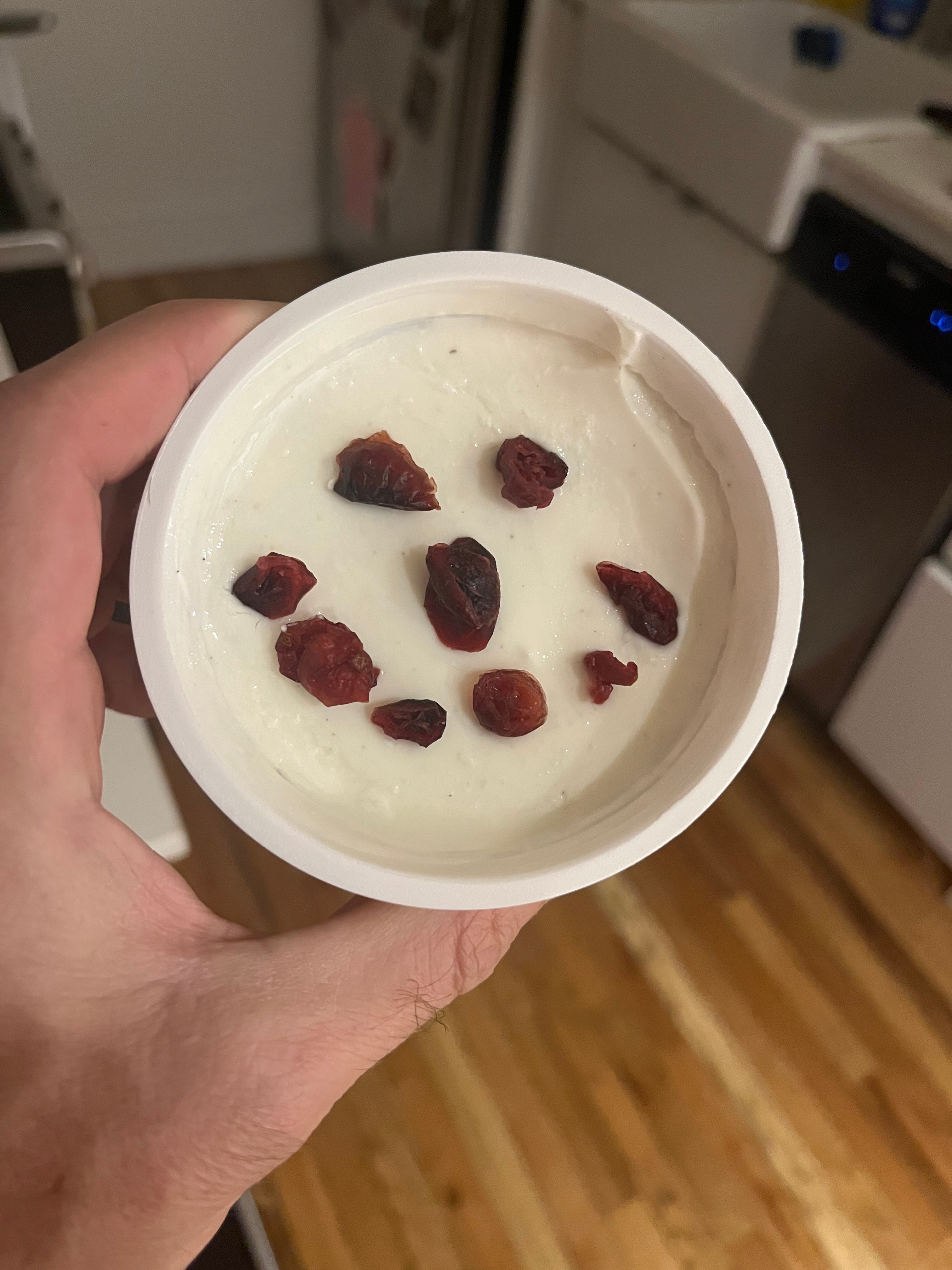
While exploring the fundamental pleasures of the sound of the word yogurt I drift into the connective memory that surrounds it and look for its source. Why do I feel pleasant when I hear the word? I don’t particularly like yogurt. I’d say 7 times out of 10 I let it expire before finishing a tub, the remaining half separated into its solid and sour liquid. There’s no grand memories that I have involving yogurt. Sometimes I enjoy it, other times I think it is too bland or the texture is strange with too much fruit buried in the murk of it. I realize now that it comes down to the enjoyment of the sound and musicality of the word—that is why I love it so much.
When I was very young, my father was (and still is) a tennis fanatic. We lived out on the Olympic Peninsula in Washington State, near Hood Canal on the Puget Sound. There were river otters, Orca whales, seals and salmon, but there wasn’t a fancy tennis club for him to practice. Fortunately, down the road from us surrounded by thickets of evergreen trees, there was an unkempt tennis court near a small field for him to practice on with his friends. I remember sitting on the side of the pitch stained courts, playing with the piles of bonfire-orange pine needles dried from the sun while my father played tennis. Lithely, and with refined attention he’d maneuver on the court sending the yellow tennis balls flying back towards his opponent whom I can’t picture anymore except for his white shirt. The light, filtered through the tall pine trees and the chain link fence that kept the white tailed deer out, shined down in an angle over my father’s wavy blonde hair and precise movements. The ball seared across the court, then, when the point was won, settled back in his hands. He would bounce the ball twice, sometimes three times, hesitate, then toss the ball high up into the air towards the edges of the trees. (YO) The ball descended, rotating just slightly, before he struck it with a swoosh from his racket and hammered it back over the net. (GURT!)

Where’s the connection you might ask? The sound? I guess it does seem tenuous, but I know it’s there. The amazement I felt in those moments courtside watching my father, is still present when I hear the word yogurt in the distant reverberations of the word. Somewhere in the connective tissue, the rhythm and the thump of the pronunciation, it reminds me of that happy moment. This is why language is reflective art, and how it came to being. Communicating the ineffable is its ultimate goal and I am reminded again and again that words and stories are music.
I’m intrigued by your exploration of the sounds and the origins of the word and how you personalize it, Eric. The addition of memory of your dad and tennis amuse me. Thank for keeping on keeping on!